Social Engineering Assessment Services

Social engineering remains one of the most effective tactics cybercriminals use to exploit human vulnerabilities, often bypassing even the strongest technical defenses. Simulated social engineering assessments empower businesses to identify weaknesses, educate employees, and strengthen their defenses against these sophisticated attacks.

Social Engineering Assessments
Trusted by 1,000+ customers nationwide

What is Social Engineering?

Social engineering is a method of manipulating individuals into divulging confidential information or performing actions that compromise an organization’s security. Unlike technical hacking methods, social engineering exploits human psychology, such as trust, fear, or curiosity, to bypass security controls. Common tactics include phishing emails, impersonation, pretexting, and baiting, all designed to deceive employees, vendors, or customers into granting unauthorized access or revealing sensitive information. Because it targets people rather than technology, social engineering can bypass even the most advanced technical defenses, making it a significant and growing threat to organizations of all sizes.

Social Engineering Testing Services

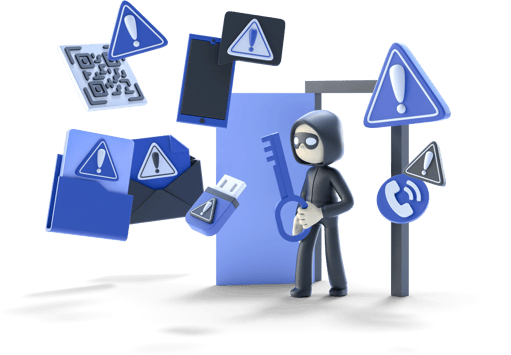
Compass offers comprehensive social engineering services designed to identify and exploit vulnerabilities just as a real attacker would. We begin with physical facility assessments to evaluate how easily an unauthorized individual could gain access to your premises and sensitive areas, and what that individual may be able to accomplish once inside. Organizations may also opt for a basic escorted walkthrough assessment instead of a full-scale covert entry assessment if preferred. Upon request, our services can be complemented by phishing and vishing campaigns to test your staff’s response to email and phone-based threats, QRishing to assess the risks posed by malicious QR codes, USB drop attacks to gauge susceptibility to baiting techniques, among other methods.

By simulating a wide range of real-world attack scenarios, Compass thoroughly evaluates your organization's defenses, uncovering potential weaknesses and providing actionable recommendations to strengthen your security posture. To further enhance your organization’s security posture, you can request to follow up the assessment with tailored security awareness training, delivered either through computer-based modules or onsite sessions. These training programs are designed to reinforce the insights gained from your assessment, equipping your team with practical knowledge and strategies to recognize and respond to potential threats effectively.

Patrick Laverty-3

Our Social Engineering practice is led by Patrick Laverty, a recognized industry expert in social engineering and OSINT. He speaks regularly at industry events nationwide and appears as an expert commentator on news stories covering cyber threats. Patrick is also the founder of the Layer 8 Conference and podcast, dedicated to educating the public on social engineering and OSINT. He holds leading certifications including Covert Access Specialist, Solo Infiltration Specialist, Physical Audit Specialist, and Certified Ethical Social Engineer.

Having a nationally recognized authority at the helm sets our social engineering services apart. Patrick brings the same expertise that earns him the stage at industry events and a voice in the media directly to our engagements, giving clients real-world attacker techniques and proven testing methods that expose human-layer vulnerabilities before adversaries can exploit them.

Social Engineering Frequently Asked Questions

Is social engineering a cyber attack?

Yes, social engineering can be considered a cyber attack, but it’s broader in scope as it can be carried out both virtually and physically. While many social engineering attacks, like phishing emails or fraudulent phone calls, occur in the digital realm to deceive individuals into sharing sensitive information or granting access, others happen in person. For example, an attacker might physically enter a facility by impersonating a trusted individual to gain unauthorized access. Whether virtual or physical, social engineering exploits human behavior rather than technological vulnerabilities to bypass security measures.

What is an example of social engineering?

An example of social engineering is a phishing email that appears to come from a trusted source, such as a bank or coworker, urging the recipient to click on a link and log in to their account. The link leads to a fake website designed to steal the user’s login credentials. Another example is a physical scenario where an attacker poses as an IT technician to gain access to restricted areas or systems by leveraging trust and authority. Both examples exploit human behavior to bypass security measures and achieve unauthorized access or data theft.

What is the best defense against social engineering?

The best defense against social engineering is a combination of employee awareness, strong security policies, and regular testing. Educating employees through comprehensive security awareness training helps them recognize and respond to social engineering tactics, such as phishing emails, impersonation, or phone scams. Establishing clear security policies, like verifying requests for sensitive information and limiting access to critical systems, adds another layer of protection. Regular assessments, such as simulated phishing campaigns or physical intrusion tests, can further identify weaknesses and reinforce training, ensuring your organization stays resilient against evolving threats.

Related Resources

Educational content and resources related to our Social Engineering service:

Ready to Assess Your Security?

Contact Our Social Engineering Experts Today

Gain critical insight into your organization’s security by seeing it through the eyes of an attacker. Our social engineering assessments identify weaknesses in your human and procedural defenses, helping you stay one step ahead of potential threats. Our expert team will provide tailored recommendations to fortify your organization's resilience against these tactics. Contact us today to uncover hidden vulnerabilities and strengthen your security posture!